The reason other counties don’t use ring circuits isn’t because they’re less safe or inherently worse in any way, which the term “substandard” clearly implies.
Yes. That is the reason.
If a ring circuit suffers a break in the live wire anywhere along its length, it fails dangerous. It will appear to be functioning properly right up until the wiring in the wall catches fire.
The only way that ring circuits could be considered somewhat safe is if they were clearly labeled and regularly tested for continuity.
When the live wire in a branch circuit breaks, the only path for current is severed. Anything prior to the fault continues to function as designed, anything past the fault does not function at all.
In a ring circuit, there are two paths. When the live wire is severed, only one path is broken. The other path continues to function, but it is now able to draw current greater than what the wire is capable of carrying. Everything on both sides of the fault will continue to function, but not as designed.
The standards the UK adopted pass higher voltages and higher currents per household circuit than pretty much anywhere else. They adopted standards that allow them to use use less wiring, less copper to provide the same energy. They can plug in many space heaters on one circuit, where two or three would blow a breaker on a US circuit.
That higher voltage and higher current makes their household circuits inherently more dangerous than household circuits outside the UK. A fault in a UK circuit passes a lot more energy than a similar fault elsewhere, before tripping a current-limiting device. The exact same fault in a UK circuit is far more dangerous than in a circuit pretty much anywhere else in the world. The standards for household wiring in the rest of the world are a lot more restrictive than the standards adopted in the UK.
UK plugs on Japanese appliance in Japanese houses (for example) are overkill. The safety provided by the UK plugs is built into the Japanese breaker panel and wiring. Putting the UK plug/socket into a Japanese circuit provides no significant additional safety benefit. The Japanese plug/socket on a UK circuit would be extraordinarily dangerous.
Again, the amount of current passed depends only on the voltage
Electrically, current depends on voltage and resistance/impedance. In practice, (and most importantly to this discussion), current draw actually depends primarily on the characteristics of the current limiting devices such as breakers, fuses, etc. Breakers on UK household circuits are designed to allow considerably more power than comparable breakers around the world.
This is the primary factor I am talking about.
Neither are the fuses in the plug, which protect the external wiring.
Those fuses are not needed in Japanese (or North American, or most other) plugs. We don’t need to protect the “external wiring” separately from the household wiring: the household circuit breaker is rated lower than the “external wiring”. Drawing a direct short on the “external wiring” in a UK circuit is not sufficient to trip the UK circuit breaker in the UK distribution panel; they need a secondary current limiter (a fuse) to provide that function.
We don’t need fuses in our plugs, specifically because our household circuit breakers are designed to trip well before your fuses would blow. (We do include fuses in any appliance or device with wiring not rated to full current.)
And lastly, no it isn’t. For one, the child safety shutters on all UK outlets are certainly not contained in a Japanese breaker panel.
The function provided by those shutters is achieved in the Japanese wiring by lower voltage, narrow holes in receptacles (allowable because they don’t need as large a contact to safely carry the lower rated current), a flared base on plugs, protective accessories for outlets in risky locations, and whole-house AFCI/GFCI.
That is utterly irrelevant. Circuit breakers and fuses are designed for the exclusive and sole purpose of protecting the circuit from being overloaded. A 100 amp circuit with a 100 Amp fuse is exactly as safe as a 20 amp circuit with a 20 amp fuse.
Stick your finger in a 20A outlet, and you’ll pull out a burned finger. Stick your finger in a 100A outlet, and you’ll lose your hand, or your life. More power will pass through you before the circuit can be interrupted.
That’s just demonstrably untrue. An individual branch of a household circuits in both the US or Japan can easily be fused at 20A
Our appliance wiring is rated to carry 20A from the receptacle throughout the appliance, or to a secondary current limiter within the appliance. Since the wiring is rated to the 20A the circuit can provide, we don’t need the secondary fuse in the plug. This is part of our appliance wiring standards.
fun fact: European branch circuis, because of the higher voltage that you were raging against in your first comment, can handle more electric load whilst having SMALLER 16A breakers)
Obviously. That has been part of my point the entire time: You use fewer, higher wattage circuits. UK circuits carries more power to pass through your body than a comparable circuit elsewhere in the world. The household wiring standards in the rest of the world are more restrictive than they are in the UK. You are repeating the exact points that I (and others) have been making from the start.
UK ring circuits are fused at 30 Amps.
30A @ 240V in the UK. 16A @220V in the EU. 15/20A @ 120V in North America. 20A @ 100V in Japan. Keep those numbers in mind, assume someone is touching a live wire sticking out of their wall, drop the attitude, and re-read my comments from the very start.
No it isn’t. I literally just told you you can buy 15A rated extension cords in Japan in the comment you’re replying to. 15, is in fact less than 20, just fyi. Are you deliberately ignoring half of what I wrote ?
I covered that. Different rating. That 15A cord will survive a 20A fault. Its rated at 15A because the voltage drop will be out of spec at 20A draw, not because it will be a fire hazard at 20A. You will be able to get enough current through that 15A cord to trip the 20A breaker. You might not be able to get 20A through a 5A cord before the cord catches fire.
My point is that UK appliances are specifically not designed to trip UK breakers in a fault. US devices are.
In every jurisdiction where fuses are not required in plugs, appliance standards require the appliance to be able to trip the household breaker. This is a fundamental concept of electrical safety.
And the resistance of your body is way to high to pass more than a few hundred milliamps anyway.
That’s actually false. You’re conflating the resistance of “skin” with the resistance if the “body”. Once you burn away that skin, your internal resistance drops substantially.


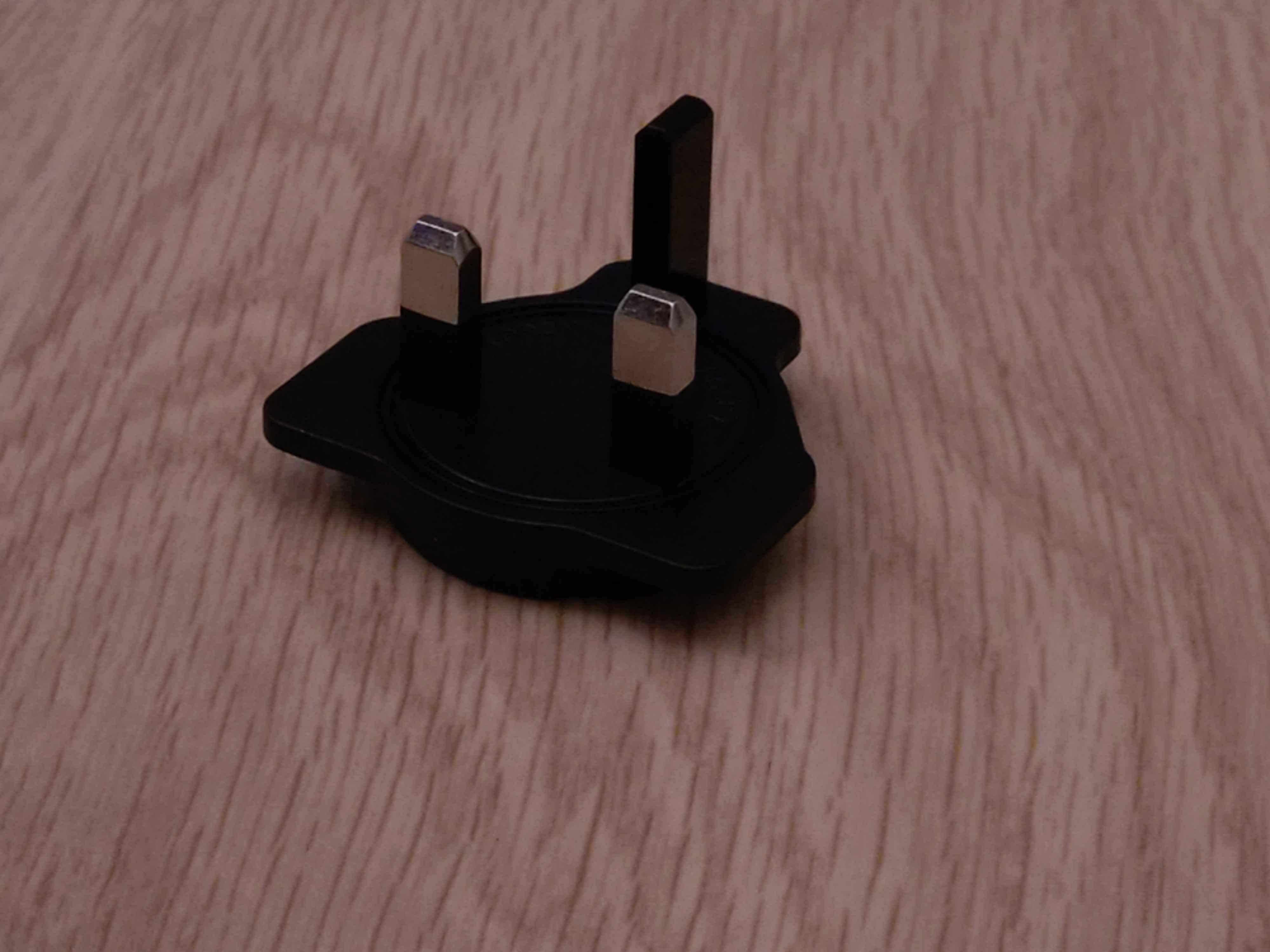
Removed by mod
Yes. That is the reason.
If a ring circuit suffers a break in the live wire anywhere along its length, it fails dangerous. It will appear to be functioning properly right up until the wiring in the wall catches fire.
The only way that ring circuits could be considered somewhat safe is if they were clearly labeled and regularly tested for continuity.
Removed by mod
When the live wire in a branch circuit breaks, the only path for current is severed. Anything prior to the fault continues to function as designed, anything past the fault does not function at all.
In a ring circuit, there are two paths. When the live wire is severed, only one path is broken. The other path continues to function, but it is now able to draw current greater than what the wire is capable of carrying. Everything on both sides of the fault will continue to function, but not as designed.
The standards the UK adopted pass higher voltages and higher currents per household circuit than pretty much anywhere else. They adopted standards that allow them to use use less wiring, less copper to provide the same energy. They can plug in many space heaters on one circuit, where two or three would blow a breaker on a US circuit.
That higher voltage and higher current makes their household circuits inherently more dangerous than household circuits outside the UK. A fault in a UK circuit passes a lot more energy than a similar fault elsewhere, before tripping a current-limiting device. The exact same fault in a UK circuit is far more dangerous than in a circuit pretty much anywhere else in the world. The standards for household wiring in the rest of the world are a lot more restrictive than the standards adopted in the UK.
UK plugs on Japanese appliance in Japanese houses (for example) are overkill. The safety provided by the UK plugs is built into the Japanese breaker panel and wiring. Putting the UK plug/socket into a Japanese circuit provides no significant additional safety benefit. The Japanese plug/socket on a UK circuit would be extraordinarily dangerous.
Removed by mod
Electrically, current depends on voltage and resistance/impedance. In practice, (and most importantly to this discussion), current draw actually depends primarily on the characteristics of the current limiting devices such as breakers, fuses, etc. Breakers on UK household circuits are designed to allow considerably more power than comparable breakers around the world.
This is the primary factor I am talking about.
Those fuses are not needed in Japanese (or North American, or most other) plugs. We don’t need to protect the “external wiring” separately from the household wiring: the household circuit breaker is rated lower than the “external wiring”. Drawing a direct short on the “external wiring” in a UK circuit is not sufficient to trip the UK circuit breaker in the UK distribution panel; they need a secondary current limiter (a fuse) to provide that function.
We don’t need fuses in our plugs, specifically because our household circuit breakers are designed to trip well before your fuses would blow. (We do include fuses in any appliance or device with wiring not rated to full current.)
The function provided by those shutters is achieved in the Japanese wiring by lower voltage, narrow holes in receptacles (allowable because they don’t need as large a contact to safely carry the lower rated current), a flared base on plugs, protective accessories for outlets in risky locations, and whole-house AFCI/GFCI.
Removed by mod
Stick your finger in a 20A outlet, and you’ll pull out a burned finger. Stick your finger in a 100A outlet, and you’ll lose your hand, or your life. More power will pass through you before the circuit can be interrupted.
Our appliance wiring is rated to carry 20A from the receptacle throughout the appliance, or to a secondary current limiter within the appliance. Since the wiring is rated to the 20A the circuit can provide, we don’t need the secondary fuse in the plug. This is part of our appliance wiring standards.
Obviously. That has been part of my point the entire time: You use fewer, higher wattage circuits. UK circuits carries more power to pass through your body than a comparable circuit elsewhere in the world. The household wiring standards in the rest of the world are more restrictive than they are in the UK. You are repeating the exact points that I (and others) have been making from the start.
30A @ 240V in the UK. 16A @220V in the EU. 15/20A @ 120V in North America. 20A @ 100V in Japan. Keep those numbers in mind, assume someone is touching a live wire sticking out of their wall, drop the attitude, and re-read my comments from the very start.
popcorn.michaeljackson
Removed by mod
I covered that. Different rating. That 15A cord will survive a 20A fault. Its rated at 15A because the voltage drop will be out of spec at 20A draw, not because it will be a fire hazard at 20A. You will be able to get enough current through that 15A cord to trip the 20A breaker. You might not be able to get 20A through a 5A cord before the cord catches fire.
My point is that UK appliances are specifically not designed to trip UK breakers in a fault. US devices are.
In every jurisdiction where fuses are not required in plugs, appliance standards require the appliance to be able to trip the household breaker. This is a fundamental concept of electrical safety.
That’s actually false. You’re conflating the resistance of “skin” with the resistance if the “body”. Once you burn away that skin, your internal resistance drops substantially.
Removed by mod