The early 2010s was peak BIOS design. When I built a new PC in 2022 to replace my 2014 4th gen i5 machine, I was amazed to discover that the BIOS interface in my brand new, $500 AM5 motherboard was actually worse than the one in my old $120 board.
The old one ran at my display’s native resolution (1080p at the time), had a contemporary interface, and cool stats showing on the left and right sides of the screen. Meanwhile the BIOS in my modern PC runs at 1024x768, is mostly text-based, and so many settings are just buried several menus deep. IDK if this is an AMD problem or an AM5 problem (not a motherboard manufacturer problem cause they’re both Gigabyte boards), but it was a shock to the system for sure to see how badly the tech has regressed.
BIOS menus have always been shitty in my experience in Intel and AMD, with my AMD motherboard I can only use the keyboard because the mouse input is incredibly slow and unusable, not sure how it passed QA.


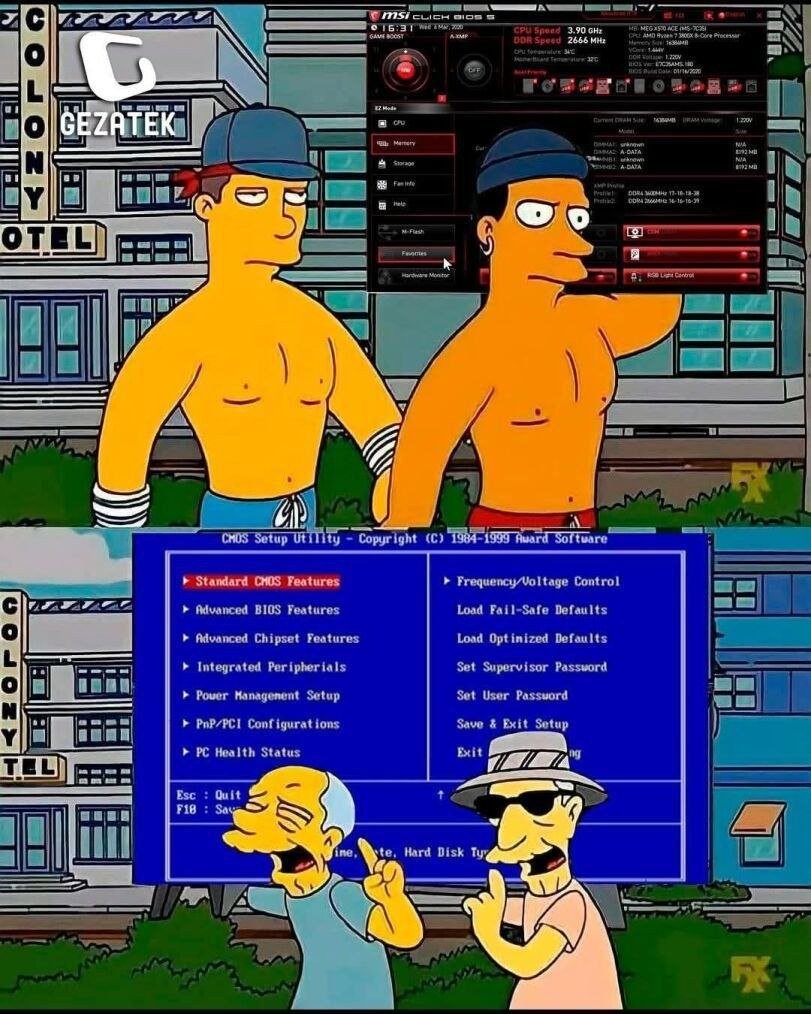
The early 2010s was peak BIOS design. When I built a new PC in 2022 to replace my 2014 4th gen i5 machine, I was amazed to discover that the BIOS interface in my brand new, $500 AM5 motherboard was actually worse than the one in my old $120 board.
The old one ran at my display’s native resolution (1080p at the time), had a contemporary interface, and cool stats showing on the left and right sides of the screen. Meanwhile the BIOS in my modern PC runs at 1024x768, is mostly text-based, and so many settings are just buried several menus deep. IDK if this is an AMD problem or an AM5 problem (not a motherboard manufacturer problem cause they’re both Gigabyte boards), but it was a shock to the system for sure to see how badly the tech has regressed.
BIOS menus have always been shitty in my experience in Intel and AMD, with my AMD motherboard I can only use the keyboard because the mouse input is incredibly slow and unusable, not sure how it passed QA.
I have the same issue on Intel raptor lake, so there’s that.