

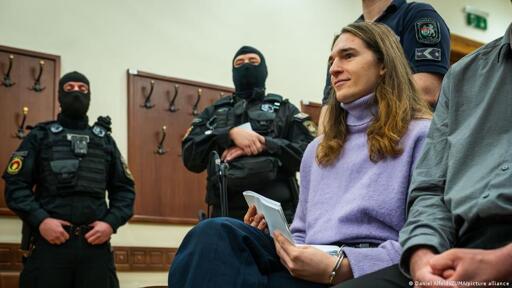
Maja T., a nonbinary anti-fascist activist from Germany, has been sentenced to eight years in prison in Budapest. The trial has been controversial and has political implications.
What I could not find in articles published in English is a mention of the very thin line of evidence. From Tagesschau (German article, translated with Deepl):
Little incriminating evidence
During the trial, the prosecution presented little evidence. Neither witness statements nor DNA evidence incriminated the accused. The prosecution argued on the basis of circumstantial evidence based on footage from a security camera near one of the crime scenes.
The prosecution stated that Maja T. could be seen in these images together with other attackers. The defence countered that the person who was supposed to be T. clearly did not have a weapon with her.
Such as by acknowledging that certain prisoners are more vulnerable to mistreatment than others, especially in countries with laws targeting them, and taking that into consideration?