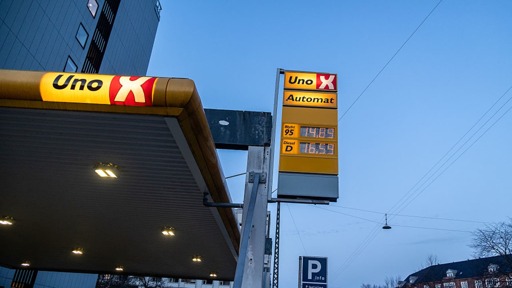
Denmark’s energy minister called on citizens to reduce their energy use amid the ongoing Middle East conflict.
Oil prices jumped to over $100 a barrel on Thursday, raising fears of rising inflation.
“If it is not strictly necessary to drive the car, then don’t do it,” the minister stressed to Danish citizens.
I mean - sure, if you make the freaking public transport at least a decent option, mister minister. When it costs twice as much as a car, and takes twice as much time to get to work then you can fuck off with your sanctimonious pleading. I don’t drive the car because I like to.
Do you have numbers to backup the twice as expensive as driving claim?
Sure, why not.
My car does 5l/100km. Distance to work is 31 km, so 62 both ways. That makes it 3.05l of gas. Gas was about 13.50 over the past year (it will be more now obviously, but who know what exactly), that makes it about 41kr for gas for the day.
One way ticket in public transport is 37kr. That is if I go straight to work and straight back. But often, I would like to stop by and do my shopping on the way back - then the ticket goes up to 42kr. That makes it 79kr for the day.
It is not exactly double, but I would say close enough.
I know you will be all like “but gas is not the only cost of having the car!!!”. To which I have to say - unfortunately when you live in a suburb, the car is part of the cost of the house. I tried living in the suburb without it, it took me an hour to take my dog to the vet. My doctor is 9km away - I won’t bike there with a flu. So I’ve come to the conclusion that owning the car is just a part of the price of a suburban home ownership, hence I don’t count it to my daily cost, as I would have had it anyway, even if I took the train to work every day.
Sure you need to own a vehicle to live outside of a city so it’s a cost you have to incur, but you have to incur much more costs the more you use it.
The maintenance is part of the cost per km. Almost every aspect of maintenance is directly related to how much the vehicle is used, and idk about you but after a considerable amount of km I spend more on maintenance than on fuel. And there is of course the cost of the vehicle itself, which also deteriorates as you accumulate kilometers.
Maybe one day we’ll figure out how to reduce our dependency on foreign oil, and increase economic stability by transitioning to electric vehicles…
Why not transition to using public transport AS much AS possible instead? Most people literally do not need their own car, if we would have a good public transport system.
I specified “electric vehicles”, of all types. Could be electric cars, buses, trams, ebikes or whatever.
if we have to still use oil, i dont see why not focus on buying from norway? dont they still have oil too? or is it just too little?
Because international commodities don’t work that way. They’re priced according to supply and demand, with cost of production and transportation as a limiter on supply. The supply of middle eastern oil has been drastically reduced to Europe, which means there’s more demand for the oil you do have, one major supplier being Norway.
Ramping up production in response to high prices is slow, expensive, and risky. They’ll likely slowly increase production if the state of affairs continues for a long time, but it’ll be like the situation when sanctions on Russia began
I started commuting by bus when this started. The trip takes 10 minutes longer, but it’s time I would have spent doomscrolling before work anyways. Now I can doomscroll on the bus instead.
I take the E-Bike and listen to podcasts or blast some music. I know I know, dangerous blablabla. Don’t care. I love it the way it is.
Unfortunately if I take the bus, trip goes from 30 mins to 2 hours…
Elect better politicians who will improve the bus service, then.
Would if I could. I vote so hard bro.
If there’s no traffic, it goes from 10-15 minutes to ~1+ hour (most of which is outside of the buses). Ebiking is great though (~40 minutes and not as affected by traffic - sometimes its faster than driving because of that).
That’s great if you can managed not to get blended to death by the 10k lb. monster trucks you’re forced to share the road with.
Commuting by train myself. I’ve picked up audiobooks. Lovely way to start and end a workday. Highly recommended.
Good fucking luck. We are married to our cars.
I truly do not give a shit until the blame for all the cars is shifted from citizens to employers.
Studies found that during covid and work from home, average vehicle miles driven didn’t significantly decrease. People still need their cars for errands and social reasons. The real culprit is the infrastructure.
Let this entire thing please normalize remote working again.
Uhm, excuse me, but how are you supposed to click and type, while you’re not situated in a depressing cubicle, after driving 1½hrs to get to the depressing cubicle?!
I like hybrid option if my team is full of good people. It is nice to socialize with your colleagues.
Depend of the team I think. We changed manager recently and all my colleagues don’t eat together, they do various thing during the lunch break. I was eating with the team before, I am eating alone now… Going on site is not for socializing anymore.
Not to mention the economic terrorism remote workers are performing every day by not going out to lunch and happy hours in dismal chain restaurants concentrated in business districts we call downtowns. Will no body think of the shareholders?!
Not really a thing in Europe. Well, not where I live.
Yeah, it’s mainly a US problem. Local governments were structured to rely on sales tax revenue and had massive budget shortfalls when remote work took off. While remote work is better for the environment and employee mental health, but it was detrimental to the local economies, so many cities started mandating returning to office instead of reevaluating how our cities are structured/zones. Currently they’re not as much places to live as they are paces to conduct business, then commute back to suburbs to live. It’s fucked and our politicians are bought/paid for by the entrenched industries that got us into this mess in the first place. Maybe we’ll do better post balkanization of the empire.
ime, plenty of people who choose to live downtown if they could afford to. but parasites have cornered housing supply to insure noone will own anything ever again
That’s basically halve the country. Why choose to work so far away? That’s not really a common commute for a Dane.
Y’all get cubicles‽
One good thing about this shitty timeline. Renewables and biking might get a big push from this. When oil becomes scarce then using it to create long term value instead of burning it for a single use becomes much more attractive.
not in the US. the govt seems disconnected with reality
Even there actually. Lots of states and companoes are suing the trump admin, because they had big plans for solar and windfarms that are now being stopped or delayed because of trump. Capitalists actually love renewables because they are super profitable. Its only the old oil money inheritors that dont.
I thought that renewable energy had at least two problems for capitalists:
- Renewable energy is getting cheaper and cheaper, which makes returns on investment decline over time.
- Renewable energy is easily distributed, working against concentration of wealth (the whole point of capitalism).
Most renewables in the US are still company owned afaik. Solar farms have absurdly small operating cost, so you just invest once and then endlessly milk it for 15-25 years. All you gotta do is mow the grass or let some sheep graze it and do some checks from time to time. Wind is a lot more complicated to maintain, because its mechanical, but the land use is much much lower so you can just pay a farmer to get him to let you use a few small plots of his land to put some turbines up. Its a win win for you and the farmer.
“seems”
You’re a lost cause anyways. We’re talking about saner countries.
It lowers global prices for solar panles, wind turbines, heat pumps, electric vehicles and so forth in the mid to long term. That is going to impact the US as well.
Cycling is a local matter anyway.
The Americans are fscked. They only have their cars.
Gas in US is still EXTREMLY cheap. like not even half op the price in europe.
Setting aside mass transit use, the relative impact of higher oil prices in the US will, I’d imagine, probably be higher than in somewhere like Europe, because Europe already has relatively high prices because it has hefty fuel taxation in the places that I’ve looked at, whereas the US has relatively low fuel taxation. That’ll make the relative price change of the cost of the crude oil changing be larger in the US.
https://moneyweek.com/economy/uk-economy/budget/604621/what-makes-up-the-price-of-a-litre-of-petrol
This has fuel duty in the UK (a consumption tax) being 39% of the price of fuel. Then VAT is 17%. So right there, that’s over half the price at the pump, 56%.
The cost of the gasoline itself — and the crude required is only one input of that — is only 29% of the price at the pump.
https://www.eia.gov/tools/faqs/faq.php?id=10&t=10
For mid-2024, this has federal tax of 18.4 cents per gallon of gasoline, and average state taxes — sales and consumption tax in the US varies by state and municipality — of 32.61 cents per gallon of gasoline.
https://fred.stlouisfed.org/series/APU000074714
Average fuel price in February 2026 is $3.065/gallon.
So taxation makes up about 17% of the price of fuel in the US.
EDIT: That being said, the US is also, these days, a net oil exporter. So there will be winners in the US, like oil extraction companies — but it won’t be vehicle operators.
Bikes are already at the limit. We need transport options for longer distances that are not a lot worse than a car.
Maybe something on rails to cover large distances between cities and towns, or like a really big car that can fit 50-100 people. If only such things existed…
Not between cities - within a city. If I can’t get around without a car once I’m there I’m going to drive my own car. Besides most trips are within a metro, if people only drove between metro areas that would be a big difference.
Both is good. With the exception of NYC, most light rail and bus networks are focused on commuter traffic in the US and trying to go anywhere other than downtown and back home is a struggle. Crosstown routes are rare or require several changes and 2-3 hrs vs 15-30 minutes by car or bicycle.
I’m not against it. However if you need a car when you get there you may as well drive. By contrast if you can not drive near home sometimes you won’t (like if your car breaks), and the better the local system is the more likely you are to use it
though the bad options most of us have is one reason not to use it.
Driving a car sucks more the longer the distance, as 130km/h is considered fast for a car, but pretty slow for a train. Trains doing less than 200km/h aren’t considered high speed. The longer the journey, the bigger the time advantage of a train should be, plus you don’t have to pay attention on pain of death the whole journey.
Most US local governments are borderline dysfunctional and can’t build anything. I would love this but I personally see more promise with e-bikes any anything else.
I think the best solution is to allow neighbors to get together and build their own cheap bike infrastructure but that’s still considered a fringe idea right now.
Our governments would rather block solutions than implement them.
But no homeoffice, you MUST drive MORE!