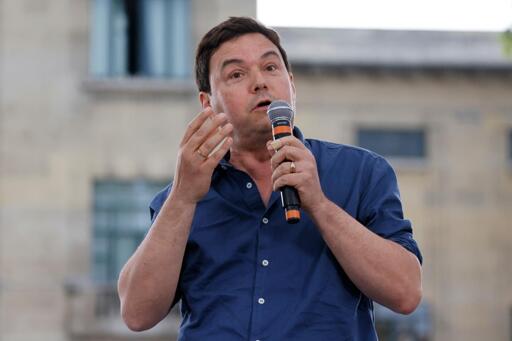
EU for the past 40 years: “yeah let’s destroy all our industry, degrade and defund welfare, and rely on external countries for our energy needs, that will surely work wonderfully!”
But at what cost?
Yeah not all of us
…“thanks to centuries of pillaging the rest of the world”
That’s really not true and you should know it. Portugal and Spain are two of the main colonial powers in European history and they were both shit poor in the 70’s. Portugal more than Spain PRECISELY because it still had colonies, that were costing it blood and money for centuries by then.
I’m not victimizing Portugal, just reminding you, and anyone else who might need to learn this, that colonization was profitable only for short periods into few pockets. Portugal had 3rd world child mortality and alphabetization rates right before joining the EU. Joining an open trade area was the secret to change that.
Also, another important reminder, most EU member states never had colonies.
Britain industrialized first in history precisely because of its wide colonies. Exploitation of the global south is not a precondition for industrialization (see China, USSR), but it was one of the key factors that kickstarted the industrial revolution.
Britain was already very industrialized before the steam engine. Portugal had colonies before Britain and was importing textiles and other utensils from the British industry already in the XVI century and even before that. Portugal and Spain totally missed the industrial revolution btw. So I don’t think those issues are that directly connected. In Portugal historians often argued that we missed the industrialization precisely because of the focus on maritime trade and colonies.
Don’t forget Britain too. They’re not as poor as Spain and Portugal by a long shot but because they had colonies, their manufacturing didn’t need to be competitive, and when the Germans developed industry, the British couldn’t compete. Still can’t.
That’s not to excuse colonial behaviours but to say that Europe is strong because of it is a misstatement.
Colonies filled some pockets but for the states, most of the time they were a money drain. Especially when effective colonization (as in taking control of vast territories and “civilize” the people) took place. The real profitable moments were mostly due to trade/piracy, and not territorial control, which is very expensive.
To win the cultural and intellectual battle, Europe must staunchly defend its model,
There is no argument in the article for why this should work in the future.
Europe profited from post colonial structures.
Redistribution is a political decision and possible to continue forever. But was redistribution the source of our prospetity, or just a bribe to buy our silence so that the elite could keep plundering the world?
With competition from China, we can’t keep selling our technology above fair prices. Without those profits will people stay willing to share? Will we be able to maintain culture and education?
Our biggest strength now is predictability and safety through social, political, and justice systems. Diverse collaboration on fair and safe ground has competitive and collective gain advantages.
Our biggest systematic risks on these unique advantages are deteriorating social systems (including the distribution of wealth) and attacks on basic rights and protections, as well as systematic inertness.
China can compete in many things, especially scale and production. But can it hold onto stability and innovation after tech has been stolen, corruption and nepotism are systemic issues, and bubbles like their real estate construction or pandemic handling are over? How well off will the average citizen be, materially, mentally, socially, and deterministically safe?
Regarding “above fair price” - the problem is currency and labor cost discrepancies. Europe can’t match low income production on price. I don’t know if that was your point, but “fair price” is different depending on the source and depending on which side of the provider and buyer you view from. If you were addressing systematic costs that should be lowered, then I don’t see that from the statement.
A lot depends on the economy, but if Europe can stand its ground and transform into a self-sufficient union, it’s not missing anything that would prevent keeping its strength and collective citizen upsides/goodness. Europe doesn’t have to produce the cheapest goods or be able to export as successfully if it shifts its economic system and political goals.
Our biggest strength now is predictability and safety…
Diverse collaboration on fair and safe ground has competitive and collective gain advantages.Why?
Our biggest systematic risks
Not lack of speed, knowledge, skills as well as corruption at the top? For a single citizen, deteriorating social systems is a risk, but that is a symptom of lower profits for the products we sell internationally.
But can it hold onto stability and innovation after tech has been stolen
EV, next gen phone networks, …
nepotism are systemic issues,
Could as well be the same or worse in the EU. Von der Leyen’s messages with Pfizer, it’s at the top.
and bubbles like their real estate construction
China is a communist country and can nationalize everything. How about the West where retirement plans depend on the value of houses?
How well off will the average citizen be, materially, mentally, socially, and deterministically safe?
As long as the US does not start a nuclear war against China, the danger is in the EU. If the world buys Chinese cars, chemicals and machines, how will the EU make money?
Regarding “above fair price” - the problem is currency and labor cost discrepancies.
That’s secondary. At first it’s the collapse of margins if there is competition. If the West builds a mine and can take 90% as compensation, that differs from taking 10%.
transform into a self-sufficient union
We always need raw materials and we have to buy them with profits from products that have to compete with Chinese products.
it’s not missing anything that would prevent keeping its strength and collective citizen upsides/goodness.
How about an elite for which goodness is not lip service and a population that doesn’t close its eyes?
Europe doesn’t have to produce the cheapest goods or be able to export as successfully if it shifts its economic system and political goals.
Not cheapest but best deal for a price range. That’s difficult, especially with our energy dependency and limited software capabilities.
The EU is the most successful multilateral group on the planet and the height of civilization.
To me, “proud” is the wrong word. I didn’t do anything when it comes to founding the EU. So how can I be proud of something I didn’t do? “Grateful” is the better word in my opinion.
Pride makes you part of the system. Gatefulness puts you outside of it. It may seem pointless to weigh between the two terms, but surely it is sourced from mindset and influences the mindset.
We don’t control or significantly influence the system individually. Still, it’s important to take ownership and control, even if it’s only in the very small, even if it’s just being a good citizen, even if it’s just being friendly or supportive of other people. Especially for a diverse, collaborative, and democratic system like Europe it’s important we see ourselves not as passive receivers but as active parts.
Being a part of the system is enough to be proud as long as you’re not actively working on destroying it. Even if it’s small, even if it’s just being friendly to others, participating is upholding.
If we don’t see ourselves as active parts of the system, others will influence and change it. The biggest risk is those who have the motivation and capability (be it position, influence, or money) will erode it.
The culture that made that happen also played a role in making you who you are. It’s OK to be proud of that.
(And likewise, it’s good to correct for how your culture influenced you in ways that you aren’t proud of. For example, it took me a long time to realise what Black Peter must look like from the outside.)
There isn’t a single European culture, and this word is often a dog whistle to racism, especially in Northern Europe.
Not saying you’re using it that way, just telling you.
No culture is 100%, but we in Europe mostly share a foundational Greco-Roman philosophy and the values of Christianity and Enlightenment.
I like how you mashed together three totally opposing things and eras there.
foundational Greco-Roman philosophy
You mean the one that was gone until it returned from the Islamic world?
and the values of Christianity
Uh-huh Palestine isn’t in Europe, last I checked.
Uh-huh Palestine isn’t in Europe, last I checked.
Palestine isn’t anywhere, last I checked.
Wait, what word? Culture?
Note that I wasn’t talking about European culture specifically, or any specific culture, for that matter. Just that your environment shaped you, and thus you can feel some pride for what that environment also begat. Pride needn’t be reserved for the extreme right.
It was, but the power monkeys always want more power. And centralising power in Europe has failed every time in history.
Please tell me you are not trying to argue that the EU is doomed to fail because Hitler and Napoleon both failed
The EU is doomed to fail if it continues centralising power though.
Its strength is in its diversity, its consensus model rather than tyranny of majority, allowing smaller countries a voice against larger ones so that Germany and France don’t entirely dominate.
The EU has a lot of good, but that doesn’t mean we need to bury our heads in the sand to its negatives either. It’s not perfect. It’s better than many similar organisations, and we should praise it for that, but praise doesn’t mean it’s immune to criticism either.
You nailed it. A cell-like structure is much harder to penetrate. Unlike a homogeneous blob with one supreme leader.
Counter point: divide and conquer
I agree with that (for the most part, I think it could do with a bit more centralisation), but I don’t think it’s what “every time in history” is pointing to
Fair.
Like the European Union?
The EU was created in 1993. There were no wars in Europe since ww2 until then. Draw your own conclusions
You have got to be taking the piss
- 1946: Greek civil war
- 1956: Hungarian revolution
- 1974: Turkish invasion of Cyprus
- 1989: Romanian revolution
- 1990: Transnistria War
- 1991: Yugoslav Wars
This does not even include the many smaller-scale rebellions or anything that happened in the Caucasus
None of those are wars. Bosnia is the first international conflict (war) on European soil since 1945.
A) Civil wars are wars by definition.
B) Some of these conflicts were international. EG the 1956 Hungarian Uprising pitched Soviet-Russian forces against Hungarians.
Yeah, I’m talking major war. Not a civil war. It’s really not a big deal.
The hell is your definition of a war that excludes all of those? The Hungarian revolution, Turkish invasion of Cyprus, and Transnistria war were all international conflicts as well
I will also note that the Bosnian war is both part of the Yugoslav wars that I mentioned and also kicked off before the Treaty of Maastricht
Er, the previous definition sets the current one?
Conflict is not war. War is international conflict, not two sets of dickheads doing the same thing they’ve been doing for millennia.
Here’s a hint. How many countries were involved in Bosnia and when was the first international genocide conviction in Europe since the Nuremberg trials?
Piketty is usually on the money, but this feels incredibly out of touch with what is actually happening on the ground. Calling this “unprecedented prosperity” is a slap in the face to anyone under 40. Sure, on a graph the GDP looks fine, but try telling that to someone in Dublin or Lisbon who spends 60 percent of their income on a moldy apartment.
We are coasting on the success of the post-war era while our current leaders do everything they can to privatize the bits that still work. The “social model” is being hollowed out by austerity every single day and we are supposed to be proud because we aren’t living in 1914? That is a pathetic bar to clear.
I am sick of these “everything is fine” takes from people who do not have to worry about their heating bills or whether their pension will even exist in thirty years. If this is the peak of European well-being, then we are in serious trouble. It feels like the elites are just congratulating themselves while the actual quality of life for the working class is in a freefall.
Europeans should count their blessings and be proud of their continent!
The top 10% of Europeans own roughly 56% to 75% of total wealth (depending on the specific region), while the bottom half of the population holds as little as 2% to 5%.
Aren’t they better stats than most other places?
You don’t have to be ill to get better
Proud of extorting the whole world for centuries for our wealth? No, thank you
Yeah, maybe skip that part. But I’d say Europe is a very different place now.
As if it stopped lol
https://africasacountry.com/2025/05/green-hydrogen-old-colonialism
Where did I say it stopped? Please, do show me because I can’t find that part
deleted by creator
deleted by creator
If you think we have stopped extracting wealth from other countries you are the insane one
deleted by creator
If you think we’re bad and exploit people, I suppose we should replicate the approach of one of those countries, right? Then we will stop exploitation, wars, everything bad in general and become better people! Is that what you believe?
If your whole argument is “we cant be bad people because look at these even worse people” then I have nothing more to say to you. There will always be someone more stinky than you. Doesn’t mean you’re clean.
deleted by creator
Yeah that’s right, calling yourself the best and ignoring glaring structural exploitation of others will surely lead us to stop doing that